Friday, 30 January 2009

A new seedling

On the first day of our permaculture course we met in Pegasus farm, an organic farm run by young Tanya and Gede, in Kayuputih. It was my second day in Bali and I had just started to appreciate the island's beauty. I was enchanted by the place and the two young people working hard to make a difference. Later on during the day, I realised the enormity of the task and I decided that I would try to give a hand to this young couple with my own modest means.

So I offered to make a website for them, in an effort to give them some visibility and promote their business to the tourist market of the island. We formed a pretty unique crew, who worked very well together, was very efficient and in two days (!) the website/blog was ready. Thank you Gede, Tanya, Martin, Manni. I think we did a great job and we had a very good time, too. And the organic meal, cooked by Gede himself and his mother was truly delicious, I don't think I have ever eaten such tasty sweet corn in my life!

Have a look at the Pegasus website and tell us what you think, we will be grateful for your feedback.

Monday, 26 January 2009

Morphological Analysis

After we had collected a list of around 10 potential community projects of KEV, I wrote into my notebook the question: How to integrate different projects without going crazy? We probably all were a bit intimidated by the complexity of the task. But with the guidance of Norman we went through all the 9 permaculture design principles from the second day and eventually came up with a satisfying result after a few battles with papers and pens. As a former Software Engineer I thought there must be a method to avoid the paper-pen-battles and so I did some research. I remembered a method which we once used in a very complex project. It was called Morphological Box. I googled for it and found the Swedish Morphological Society which had done a lot of research on Morphological Analysis and even developed a Computer Program to support the method. On their site you can find a tutorial about the method and how to apply it. You will also find that the name is derived from "morphe", which is - surprise, surprise - greek and means form. The method was developed by Fritz Zwicky, a swiss-american astrophysicist.

"... within the final and true world image everything is related to everything, and nothing can be discarded a priori as being unimportant." (Fritz Zwicky: Discovery, Invention, Research through the Morphological Approach, 1969.)

"Morphological analysis is simply an ordered way of looking at things." (Fritz Zwicky: "Morphological Astronomy", The Observatory. Vol. 68, No. 845, Aug. 1948.)

Doesn't this sound like a permacultural view?

I wrote this posting because Norman reminded us several times how useful it would be to have a Softwaretool for Permaculture Design. Maybe Morphological Analysis could be a start.

Sunday, 25 January 2009

Sustainable communities, day 3

Today the ongoing exercise about selecting and designing community projects for the Kalisada Ecovillage based on the permaculture design principles did help me stay coolheaded and not too sad that this was the last day of the workshop. It was actually great to apply all the permaculture design principles to potential projects and some great ideas emerged. From the long and rich list of ideas we had, Norman suggested that we all selected individually the ones that seemed most appropriate, of higher priority and also feasible, to come first to the KEV agenda. It was very interesting to see that we did not have many differences among us about which projects could be realised first. We also concluded that a set of guidelines and rules should be put together for all the members of the KEV project to agree upon.

The most confidence inspiring and motivating part of the day came last: once we had the list of projects that we figured would be the best kick-start, we set off to determine the beneficial relationships these projects will generate among all stakeholders and among the projects themselves. It was fascinating to see the results: a rich web of connections and links, that revealed the advantages of each project and justified their realization almost without any effort.

What the teacher did not let us say in the classroom

As we were approaching the end of the session and the whole workshop, I was really frustrated that Norman asked us to give him our feedback about the workshop via email rather than 'live'. I felt so grateful to him so often during the workshop that I was really looking forward to expressing this gratitude in the 'class'. And I am a Greek, on top of everything, so I love being dramatic and emotional. My frustration went away quickly, though, because I thought "he he, I will write it all on the blog, Norman, I haven't said my last word yet". And so I will.

Very often during these twelve days of the course I could not help thinking how great it would be for kids and young people to have teachers like Norman at school, how inspiring it would have been for me and for people like me to have teachers like Norman in the university. Teachers who are enthusiastic, inspired, engaging, full of energy, teachers who lead a life consistent with what they preach and live a happy and fulfilling life for this very reason. The way I understood it, permaculture is a way of life, a truly alternative solution to modern man's dead ends, an invitation to wise action even if the results are not perfect, since life itself is not perfect. Thank you Norman.

Saturday, 24 January 2009

Sustainable Communities, day 2


Before we started today's session we got armed with two important permaculture principles, that actually apply to any project design:

  • Spend more time in planning and design than most people do in order to avoid wasting time and resources later.
  • Try as a strategy to build beneficial relationships between as many components of your project as you can.

We also mentioned the basic steps towards the realisation of a project:

  1. Create the project concept.
  2. Design and budget the project.
  3. Identify the funding sources.
  4. Plan for adequate management and sufficient follow-up.
  5. Initiate the project.
  6. Be happy about what you have accomplished :-)

It proved relatively easy to select between the community projects we had proposed yesterday: the Kalisada EcoVillage has been in the centre of our interest during quite a few sessions of the whole course and many people from the course are involved in it. So we chose to focus on the KEV (let's put this acronym to the test, shall we?) community projects.

When we actually put all the ideas for community projects in Kalisada on the table, or more accurately put on the white board, the whole endeavour seemed intimidating, especially to people like me, who are not involved in the project and have not been involved in building a business from scratch (and of this size and scope and with so many stakeholders, wow!) But the attack strategy that Norm proposed was so interesting that I almost forgot my cold feet. The idea was to apply the eight permaculture design methods to the design of the Kalisada Community projects. Impressive, eh?

Impressive, yes, but not so easy, especially on a hot, humid afternoon like today's! But we were brave and inventive and the brainstorming worked pretty well and we managed to come to the middle of the exercise, that is, apply four of the eight methods of project design to the ten (!) broad categories of community projects the Kalisada EcoVillagers could take up. Tomorrow it the last day of the course and we will go on with the exercise. I am eager to see how we will combine all the elements discussed and what criteria we will use in order to chose the projects that will be actually initiated and curried out! The excitement should help me forget the sad fact that tomorrow is the last day of the course and that this wonderful experience will soon end, hopefully giving way to new, exciting collaborations and endeavours.

Friday, 23 January 2009

Sustainable Communities, day 1

When coming home from the course today, I started browsing a book that Norm recommended, Managing the Non-profit Organization and I stumbled upon the phrase "Good intentions don't move mountains bulldozers do". It's quite interesting that Norman started today's session by writing on the white board "The road to hell is paved with good intentions". I think that the message is clear, good intentions are not enough to make this world a better place and sometimes they can even cause more harm than good. We may not want to move mountains at all (and permaculture-wise I wouldn't think it is a good idea..) but, in whatever project we engage we should try to get our act together, follow certain rules and principles, and go out there and realise it!

Some things to remember when considering any community project, or any personal project for that matter, would be:

  • Check the social, financial and environmental sustainability of the project (does this ring a bell?).
  • Check if the project is need-based.
  • Involve the beneficiaries in the process from the beginning. A community project is not worth doing if you don't have cooperation with the locals (in other words, don't knock on closed doors).
  • Avoid, if possible, complicated structures in order to get funding and try working with your personal network.
  • Do a cost-benefit analysis.
  • Do what you are good at or what you have passion for.
  • Focus on your local community. Buy locally, employ locally.
  • You don't need to say yes all the time, if you think you cannot handle a project or carry it out properly, don't promise to do it or don't start doing it.
  • Make yourself aware of legal issues, so that you avoid getting exposed to unnecessary risk.
  • Be patient and have long-term commitment: things don't change from one day to the next.
  • Work with people who care.

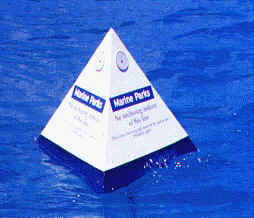
Reef Protection Markers in the Whitsundays, a marker of a successful project that Norman took up in Australia with OUCH volunteers.The first of the Toblerone generation?

We also talked about real-life projects and why they succeeded or failed, about different kind of structures that could be used to run projects and about different types of projects pertinent to the Balinese context.

It was high time we'd had a brainstorming about possible projects this group could take up! We came up with quite a few ideas, which we'll discuss tomorrow. Yes! Permaculture in action!

P.S. Sri from Adinda Rose joined the team today. She had a lot of interesting input for us, being a Balinese active in community work and wild animals' protection. I hope she enjoyed the course as much as we enjoyed her participation.

Wednesday, 21 January 2009

Permaculture exercise


Yesterday, we went with Evelyn for lunch to Gina's place in Selat, Sananda Centre, a lovely place with bungalows and a seminar centre.
We budding permaculture designers went around the property, trying to see it from the permaculture point of view and trying to suggest solutions to problems or beneficial changes that could make a difference.

I felt a bit like an apprentice magician, struggling to apply my limited knowledge on a real-life case and without Norman's guidance. It was fun! We talked about the position and design of the swimming-pool that Gina plans to have built, changes and improvements in the garden and in the buildings. We saw what termites can do to wooden structures and that was impressive! And costly to fight and repair!

I don't know if we were good consultants (although the ideas we had were pretty good, don't you agree Evelyn?) but we certainly gave all our good energy and best wishes to Gina with her nice project. And I think she appreciated it, too.

Sunday, 18 January 2009

Sustainable building, day 3

It's hard to imagine a better way to finish the 'Sustainable Building' workshop than we did today.

In the morning we went to Kalisada to see to the completion of the Waste Water Garden piping in Lynda's and Glen's house. Mr Murphy forgot us today, and the works progressed very well.

The working crew went on with the pipe connections, put the tank in its place filled with water and also positioned accurately the pipe on the leach field. I was very happy to see the physics principle of communicating vessels (Prinzip der kommunizierenden Röhren :-) in action, more than two decades after learning it at school :-/. We used it to position the leach field pipe flat (not sloping) on the ground.

After Kalisada we went to Annete's place and we had a unique opportunity to reflect on one of the permaculture design principles that are harder to grasp: that of random assembly. The way I understand it, permaculture is about working towards a certain quality of life, about meeting our 'non-material needs in a sustainable way' and for this to be attained, intuition, art, our personal vision and philosophy of life join forces with scientific method and technology. (I tried it to make it sound not so cosmic, Norman!)

This is what Annette and Nyoman are doing, building Annette's wonderland.

Norman tried hard to keep us on the ground, faithful to the permaculture principles (Stay on the ground, be practical) and he asked us to interview Annette as if we were permaculture designers and she were our client. We discussed concrete solutions about the most important issues in the property, like water storage and quality. We then made a tour of the property, we finally visited the snake and the new house they are building entirely from natural materials, like earth bricks, wood, mud and thatch and we discussed a bunch of interesting ideas about natural materials and building techniques.

Since we were on a coastal area, Norman did not miss the opportunity to talk about the global warming effect on areas like this, that will probably be apparent in the not-so-distant future. Although this is quite gloomy prospect, I remember how Norman opened this workshop, by saying that 'yes, the future may not seem so bright, but there are things we can do and there are ways out of the mess we have put ourselves in. We just need to go ahead and start doing something about it!' And this is exactly what we are aiming for in the next Workshop about 'Sustainable Communities', do something about it....